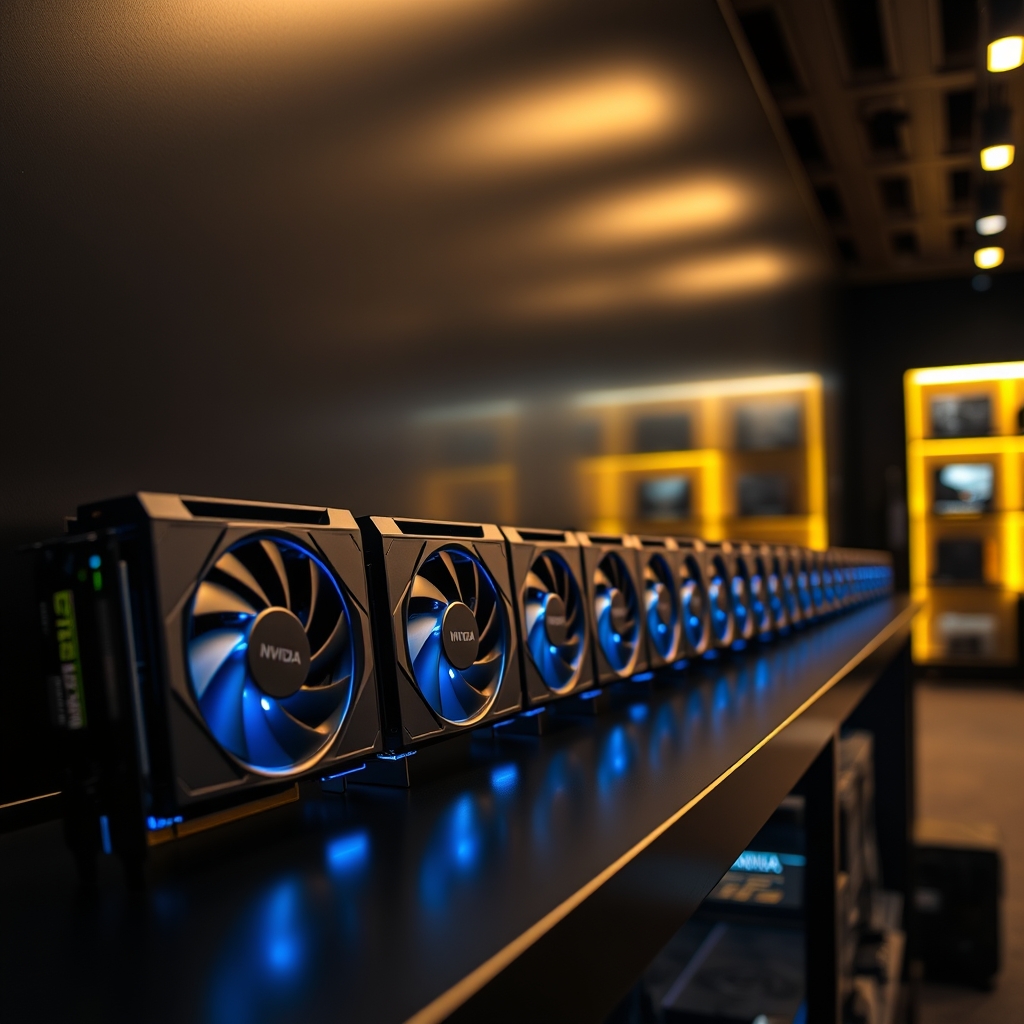
NVIDIA's Third GPU Price Hike of 2026 Pushes RTX 50-Series Cards to New Highs
A DRAM supply shortage triggered by the AI boom is sending NVIDIA's entire RTX 50 lineup up sharply in price, with the RTX 5090 now topping $5,000 and mid-range cards jumping 27 to 39 percent.
NVIDIA has launched what appears to be its third GPU price hike of 2026, raising GeForce RTX 50-series graphics card costs by 20 to 30 percent across all model tiers. The move, reported first by the Taiwanese publication Economic Daily Times and now confirmed by widespread market reporting, is reshaping the consumer GPU landscape and pushing the flagship RTX 5090 over $5,000 in several retail markets.
At the root of the increase is the AI boom's impact on the DRAM supply chain. As hyperscale data centers gobble up ever-larger quantities of memory for AI accelerators, the same high-bandwidth and standard DRAM that goes into consumer graphics cards has become scarce and expensive. The result is a ripple effect: memory-related price increases at the component level are flowing through to every NVIDIA SKU built on the Blackwell architecture, regardless of tier.
Mid-Range Cards Hit the Hardest
The sharpest percentage jumps are landing on mid-range cards in the $400 to $900 price band. The RTX 5060 Ti 16GB — previously the sweet spot for enthusiasts seeking high frame rates at a reasonable cost — has seen its price jump roughly 39 percent. The RTX 5070 is up about 36 percent from its original launch pricing. Supply-chain data reviewed in September 2026 pins the broader increase across cards with 16GB or more of VRAM in the 15 to 20 percent range, with the sharpest individual jumps exceeding that at specific SKUs.
- RTX 5090: Topping $5,000 in several retail markets, up from a $1,999 MSRP at launch — a jump approaching 150 percent.
- RTX 5060 Ti 16GB: Up roughly 39 percent. The new price point makes it a marginal value proposition against previous-generation alternatives.
- RTX 5070: Up about 36 percent. Still competitive, but no longer the default recommendation for cost-conscious gamers.
- RTX 5080: Up roughly 25 to 30 percent. A meaningful increase for the premium mid-range segment it was designed to fill.
- RTX 5070 Ti: Up roughly 25 to 30 percent.
- RTX 5060 / RTX 5050: Lower-tier cards are seeing smaller absolute increases, though percentage jumps remain significant for the sub-$300 segment.
The RTX 5090 at $5,000
The headline number is the RTX 5090. At the $5,000 price point that now appears in several major retail markets, the card is no longer a premium enthusiast purchase — it is squarely in the territory of a secondhand luxury car. The GPU's 32GB of GDDR7 VRAM and Blackwell architecture make it the fastest consumer graphics card available, but the pricing is creating a segment of buyers who simply cannot justify the premium for the performance gain over a $700 or $800 card. For many gamers, the upgrade cycle has effectively been pushed from 2027 into 2028.
The price increase is not confined to consumer hardware. NVIDIA's data center GPU lineups — including the H200, B200, and the newer Vera Rubin and Grace Blackwell platforms still ramping toward volume shipments — are also affected. Trade reports indicate the price bump applies to the full server GPU lineup, making high-capacity AI infrastructure more expensive across the board. NVIDIA has not published a per-SKU price breakdown and has not issued a public statement detailing exact percentage increases by chip generation.
If you are planning to purchase a new graphics card in the next few months, expect to pay meaningfully more than the original MSRP for the same product you saw listed six months ago. Mid-range cards (RTX 5060, 5070, 5060 Ti) have seen the largest percentage jumps relative to their launch price. Enthusiasts targeting the RTX 5080 or 5090 should budget significantly above the advertised MSRP. The price increases are being absorbed across the entire line rather than concentrated in the flagship tier, which means there is no longer a 'cheap option' within the RTX 50 family. AMD's competing Radeon cards are also being affected by the same memory cost pressures, so switching vendors will not reliably save money.
Sources: TechPowerUp — NVIDIA RTX 50-Series 20-30% Price Hike; Tech Insider — NVIDIA RTX 5090 Tops $5,000 as GPU Prices Jump 39%.
Corrections: Report an error at corrections@wireshaman.com.