OpenAI engineer arrested for planting a spy recorder in an executive conference room
A Saudi national and OpenAI engineer was arrested after a tiny covert recorder was discovered in an executive conference room at San Francisco headquarters, prosecutors say, triggering what may be one of the first insider-surveillance cases inside a frontier AI lab.
The U.S. Department of Justice has charged an OpenAI engineer with planting a covert audio recording device inside the company's executive conference room, prosecutors said on Tuesday, in a case that marks what appears to be one of the first instances of an AI-lab insider using classic espionage tradecraft against his own employer.
The arrest
Abdulrahman Alfozan, a 42-year-old Saudi national who worked at OpenAI as an engineer on the company's systems team, was arrested on October 9 at his home in Oakland, California, federal officials said. The arrest followed discovery of the spy device in a second-floor executive conference room at OpenAI's San Francisco headquarters, according to the Justice Department's Office of Public Affairs and reporting by Politico, The Washington Post, and the San Francisco Standard.
Alfozan now faces a federal charge under 18 U.S.C. § 2511, the core wiretapping provision of the federal wiretap law. A conviction carries up to five years in prison. The device, prosecutors said, was modified to record audio from inside the room and transmit the recordings externally. The case was brought by the U.S. Attorney's Office for the Northern District of California in coordination with the FBI, which OpenAI has said it supports.
What prosecutors say
According to the department, Alfozan began recording conversations in the executive conference room sometime in the summer of 2026. Prosecutors said they identified two of his managers as possible victims, though the indictment does not spell out the content of the recordings or identify the conversations captured. OpenAI confirmed the arrest on social media on Monday and stated the company is cooperating with the FBI's investigation, without offering further comment.
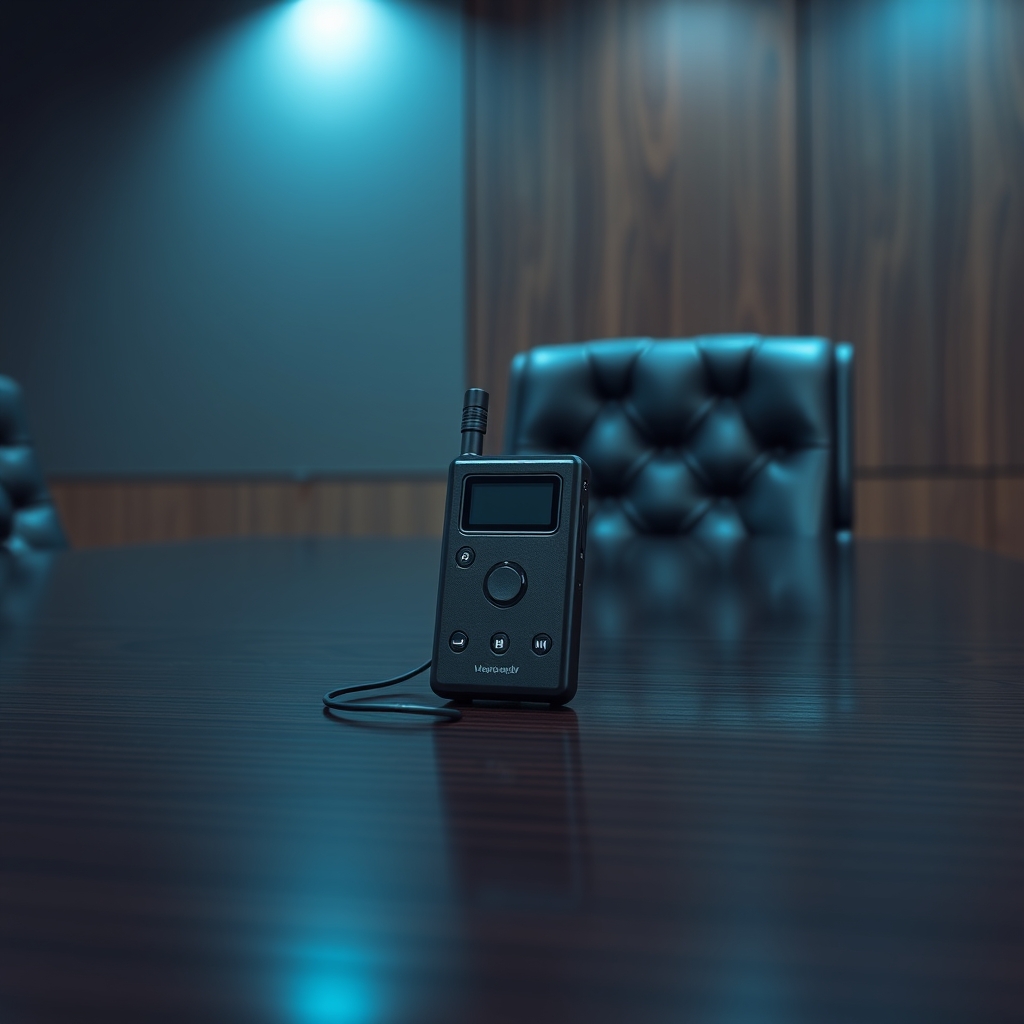
The details that stand out are the physical ones. The recorder was not a software implant or a malware package pushed onto a corporate laptop. It was a tiny, battery-powered hardware device — the kind of micro-recorder long favored by intelligence agencies and corporate spies — physically placed where it could sit unremarkable on the conference table. That suggests a deliberate, hands-on intrusion rather than a routine data leak, and it raises the question of how easily a trusted engineer inside a frontier AI lab can surveil its most senior decision-makers.
Alfozan has been a fixture at OpenAI since the company founded in 2015, per his professional profile. Prosecutors did not allege ties to a foreign government, nor did they say the recordings were exfiltrated to a competitor. In the absence of an espionage charge, the case lands closer to a serious insider abuse than a state-sponsored espionage operation — but the fact pattern is exactly the kind of scenario AI-lab security teams have spent years planning for.
Why it matters
The timing matters. OpenAI and its peer labs operate in a period of unusually intense internal and external pressure: internal governance disputes, competitive leaks, and a wave of senior talent moving between rivals. A single engineer with floor access to executive rooms and familiarity with which meetings happen when is an ideal platform for quiet surveillance. This incident suggests the lab's physical-security and counterintelligence assumptions — that insiders would leak via data, not hardware — may not hold.
For the broader tech industry, the case is a warning about perimeter trust. Corporate surveillance defenses have long focused on network traffic, endpoint malware, and export controls on laptops and drives. Covert physical recording devices defeat most of that stack if the person carrying them has legitimate access. The fix is not just better cameras or badge logs; it is the hard problem of detecting an insider whose access itself is the vector.
Alfozan has been released on a $250,000 cash bond that also restricts his access to the OpenAI campus, according to reporting. Prosecutors did not say whether he faces additional charges, or whether recordings were shared with any third party. If an espionage or foreign-ties charge later emerges, the story shifts from an insider-abuse matter to a genuine counterintelligence case inside one of the most watched companies in the world.
The bottom line
For now, the DOJ indictment establishes the core claim: an OpenAI engineer installed an unconnected, battery-powered spy device in a second-floor executive conference room and was charged with federal wiretapping. It is a rare public glimpse into the physical-security world of a frontier AI lab, and a reminder that the most sensitive conversations in the industry can be captured not by a breach, but by a colleague with a tiny recorder and a legitimate badge.
Sources: U.S. Department of Justice, Office of Public Affairs: Saudi National Arrested for Installing Surreptitious Audio Recording Device at OpenAI; The Washington Post: FBI arrests OpenAI employee for allegedly planting bug in the office; Politico: OpenAI employee arrested and charged over hidden recording.
Corrections: Report an error at corrections@wireshaman.com.