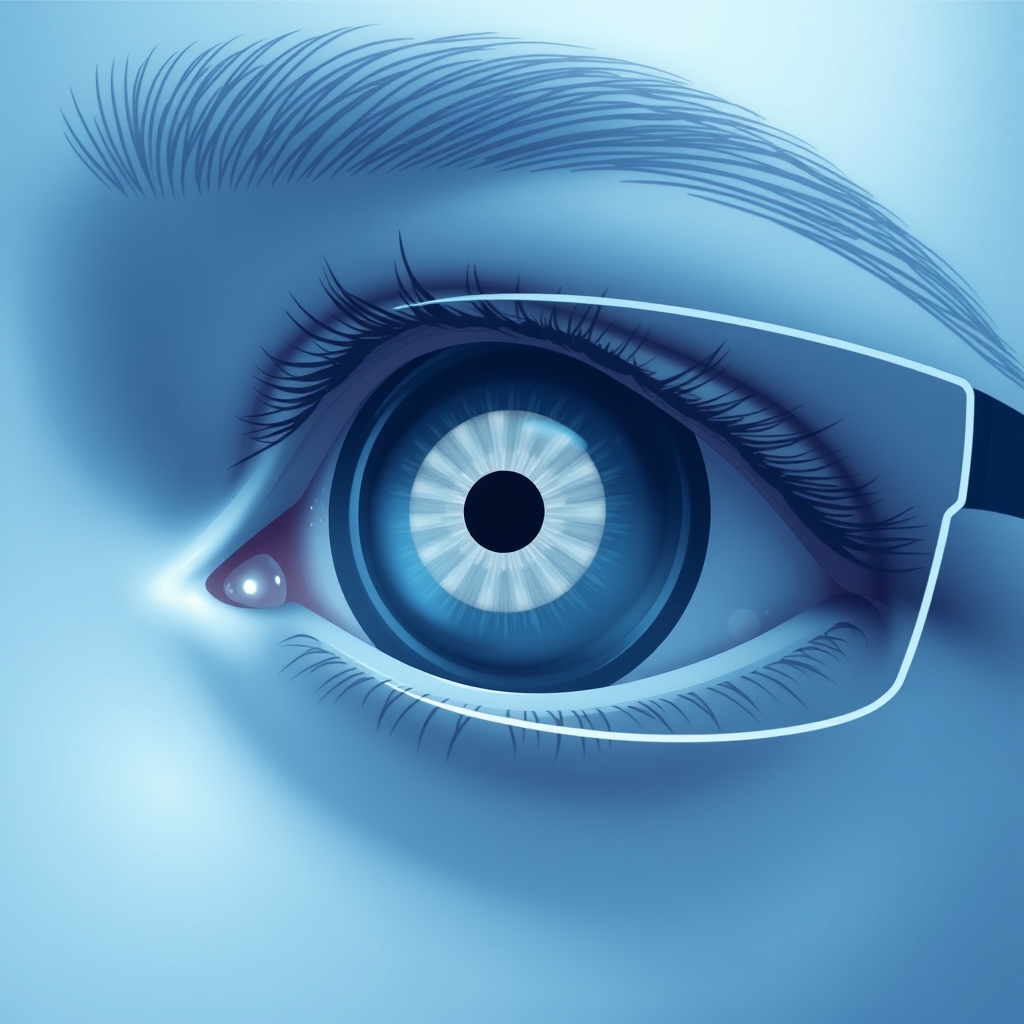
Science Corp implants its PRIMA vision chip in a first Stargardt patient
Hodak, who left Neuralink to build the company, says the retina is part of the brain and a 2mm implant can hand a sharp black-and-white patch of vision back to people whose light-sensing cells have died.
Science Corporation, the neural-engineering startup founded by former Neuralink president and co-founder Max Hodak, announced it has implanted its PRIMA vision-restoring chip in its first patient with Stargardt disease — a rare inherited eye condition that slowly destroys central vision and is currently considered incurable.
The company says the patient received the implant in May as part of an ongoing trial at the Sydney Eye Hospital in Australia. During the first rehabilitation session the patient saw a letter; by the second session he could read a word. The milestone was set out by Hodak on the main stage at TechCrunch Disrupt in October 2026, where he framed PRIMA as a proving ground for a far broader ambition: a novel brain-computer interface (BCI) that reaches well beyond controlling computers.
How the implant restores vision
Hodak's framing is that the retina is part of the central nervous system and that vision, at its core, is simply electrical activity travelling down the optic nerve.
- An hour-long procedure plants a 2mm-by-2mm chip in the back of the eye, where the light-sensing photoreceptors have degenerated while the inner retina that passes signals to the brain remains intact.
- The patient then wears camera-equipped glasses that capture the world and relay it to the implant, which acts as a bank of artificial photoreceptors.
- The result is not wide-angle colour vision but a sharp, high-contrast black-and-white patch in the centre of the patient's field — enough to read a few letters or a short word at a time.
The approach is a natural fit for Stargardt disease, which kills the outer retina's light-sensing cells while often sparing the inner retina and optic nerve — exactly the parts PRIMA needs to function. It sits on the back of a device that is already commercially available in Europe for patients who have lost vision to geographic atrophy, an advanced form of age-related macular degeneration. The company now believes the same device can extend to multiple diseases beyond that one, including the roughly 150,000 people worldwide who have lost vision to Stargardt.
From a single implant to a general BCI
Hodak is careful to present PRIMA as a stepping stone rather than the destination. He argues that cochlear implants, retinal prostheses and motor prostheses are all, in effect, different flavours of the same technology — an interface between the body's electrical systems and a device. Science Corporation's longer-term plan, he said, is a sensor implanted inside the skull that rests on top of the brain rather than penetrating brain tissue, distinct from the approach pioneered by his former company.
On acuity timelines, Hodak says the company has a clear path from the current low-resolution patch to something closer to native visual detail over the next five years. The immediate next generation, to reach human patients within a year, will need a larger implant that conforms to the eye's curvature and smaller electrodes to pack in far more detail.
What this means for you
If you follow the brain-computer-interface race, Science Corporation just showed its retinal-implant bet is moving from lab claims to real clinical progress, with a first Stargardt patient reading words. For people living with inherited macular diseases, the practical takeaway is cautious but concrete: a device that already works for one blinding condition is now being tested against another, and Hodak says a bigger, higher-resolution generation is aimed at humans within a year. Expect retinal prostheses and the broader BCI story to become increasingly entangled as the two fields share the same engineering and regulatory path.
The announcement lands a few years after Hodak founded Science Corporation in 2021 and after the company won European approval for PRIMA earlier this year. It is the most concrete public signal yet that the company's vision-restoration programme — its chosen on-ramp to a sustainable business — is producing measurable results in humans with a disease that, outside of a trial like this one, still has no cure. Readers who want primary sourcing on this story can start with the TechCrunch report and Science Corporation's background in the press.
Sources: TechCrunch: Science Corporation implants its vision-restoring chip in its first Stargardt disease patient; Wikipedia: Science (company).
Corrections: Report an error at corrections@wireshaman.com.