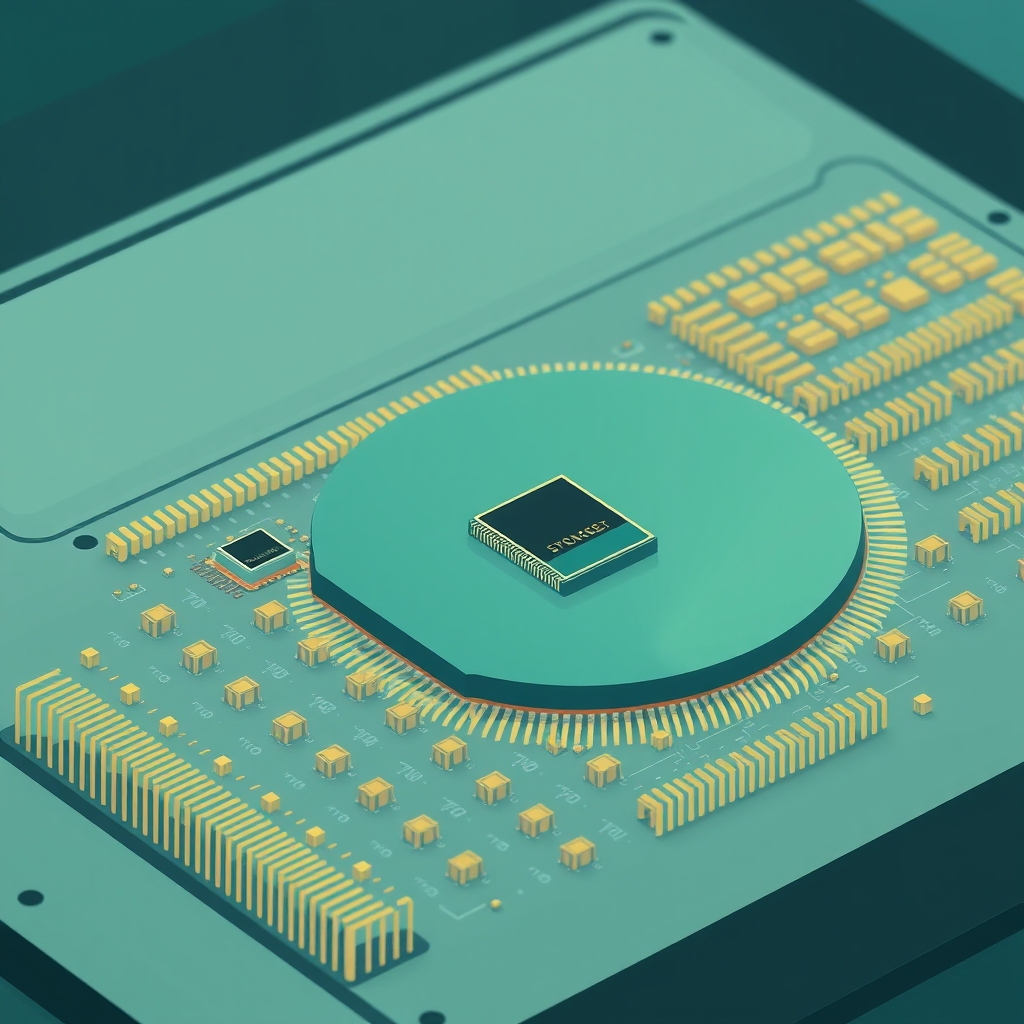
SK hynix builds its own tiny CPU cores for SSD controllers to cut dependence on Arm
As SSDs get smarter, SK hynix wants its own silicon under the hood. The move is a signal that storage controllers are becoming a design battleground in their own right.
Why custom SSD controller cores matter
SK hynix has said it will place custom, in-house CPU cores inside its own SSD controller silicon, according to Tom's Hardware reporting from October 14, 2026. The goal is to ease what the company describes as an Arm licensing load as drive storage grows increasingly intelligent and controllers need to run more sophisticated workloads on the die itself.
SSD controllers have long been a relatively simple piece of glue logic: a processor or processor cluster managing NVMe commands, running the flash translation layer, and handling error correction. As drives take on more tasks such as inline encryption, compression, and increasingly host-side AI acceleration, the controller processor has to do a lot more. That makes the choice of CPU architecture and how it is sourced a commercially meaningful decision, not just an implementation detail.
The standard path has been to license cores from Arm. Arm's Cortex-A and Cortex-R lines are widely used in SSD controller ASICs because they are well-understood, power-efficient, and available with strong IP support. Licensing from Arm lets a drive maker focus its engineering on the memory interface and controller logic rather than processor design. But licensing also means a per-die royalty stream and a dependency on a third-party roadmap that can shift, reprice, or change its licensing terms.
What in-house cores would look like
An in-house core design for an SSD controller would almost certainly be small. The controller has limited power budget and silicon area, and the processing needed is far less demanding than a smartphone CPU. Think of RISC-V based cores, or a custom Arm-compatible design that SK hynix owns outright, tuned for the specific instruction mix a flash translation layer and NVMe command pipeline actually needs. The cores would be optimised for throughput and latency on storage-specific operations, not for running an operating system.
- Reduced licensing cost by removing Arm per-die royalties from controller silicon
- Greater control over the controller processor road map, matched to SK hynix drive SKUs
- Potential for tighter integration between the core and the NAND interface logic
- A signal that SK hynix views controller architecture as a differentiator, not a commodity
- A hedge against Arm licensing terms shifting in future generation cycles
The strategic context matters. SK hynix is a leading supplier of DRAM and NAND flash. It ships some of the highest-capacity consumer and enterprise SSDs on the market. As it pushes drives toward higher bandwidth, inline processing, and AI-optimised storage, the controller is becoming more than a commodity part. Owning the core silicon gives SK hynix more leverage over the performance and cost curve of the drives it ships, and a way to differentiate its products from those of competitors building on the same Arm-licensed controller IP.
If you buy an SK hynix branded or SK hynix based enterprise SSD in the coming years, the controller inside it may run on silicon the company designed itself rather than one borrowed from Arm. That could translate into better per-watt performance, tighter integration between the controller and the memory, and a drive road map that is less dependent on third-party licensing. For enterprise buyers, it also means one more variable to watch when evaluating drive longevity and firmware support across multi-year deployments.
Sources: Tom's Hardware - SK hynix SSD controller custom CPU cores; Tom's Hardware.
Corrections: Report an error at corrections@wireshaman.com.